Arabic · ar
مرحباArabic voice over, country by country
There is one written Arabic and many spoken ones. Modern Standard Arabic is understood across the Arab world and suits institutions, news and learning; advertising usually lands only in the Arabic people speak at home, which changes from country to country.
- Name in the language
- العربية
- Script
- Arabic, right to left
- Region
- Middle East and North Africa
- Availability
- We cast it
Gulf
Saudi Arabia, United Arab Emirates, Kuwait, Qatar, Bahrain, Oman
A voice from the target country for advertising: Gulf speech is shared, but Saudi, Emirati, Kuwaiti and Omani listeners each hear their own.
Choose a market to see which Arabic to castMap data: Natural Earth, public domain
The short answer
Is Modern Standard Arabic enough for every country?
For institutions, news-style films and most e-learning, yes. For advertising and anything that should feel close, cast the spoken Arabic of the market, or Standard Arabic delivered with that market's colour.
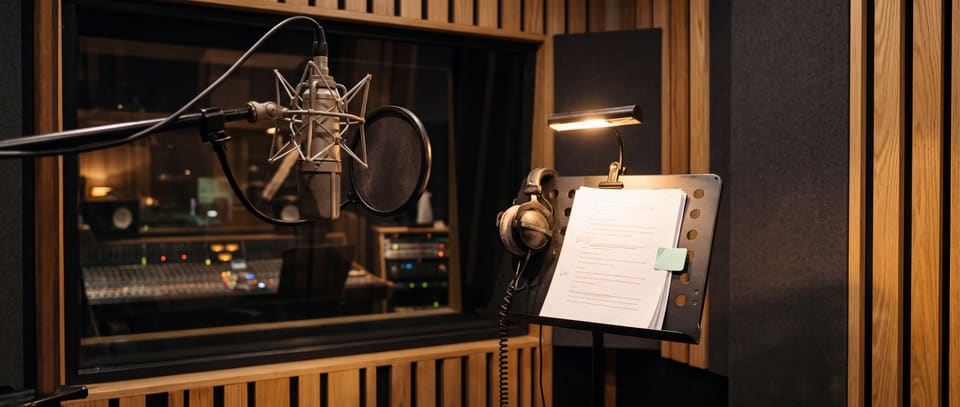
Arabic, market by market
Which Arabic to cast for each market, Standard or spoken, Gulf, Egyptian, Levantine, Iraqi or Maghrebi, and the decisions every Arabic script shares.
How it works
From brief to final audio.
- 01
Tell us about the project
Share the markets, the script or its estimated length, the usage and the deadline.
- 02
Choose the voice
We send a shortlist of native Arabic voices for each market, with samples in your tone and notes on accent and register. You choose, and we book.
- 03
Receive the final audio
Edited takes for every language and version, named by language, in the formats your editor or learning platform needs.
Choose the read
Which Arabic for which market.
Find the audience’s country, then cast the variant it speaks. Markets with their own page link to it.
| Market | Cast | Page |
|---|---|---|
| Gulf: Saudi Arabia, United Arab Emirates, Kuwait, Qatar, Bahrain, Oman | A voice from the target country for advertising: Gulf speech is shared, but Saudi, Emirati, Kuwaiti and Omani listeners each hear their own. | Arabic (Gulf states)Arabic (Oman) |
| Egypt | Egyptian Arabic, the most widely understood spoken Arabic thanks to Egyptian film and television; first choice for Egypt and an option for pan-Arab entertainment. | On request |
| Levant: Lebanon, Syria, Jordan, Palestine | Levantine Arabic for advertising and lifestyle content; Lebanese and Jordanian voices are not interchangeable for local campaigns. | On request |
| Iraq | Iraqi Arabic for local campaigns; Standard Arabic for institutions. | On request |
| Maghreb: Morocco, Algeria, Tunisia, Libya | Darija is hard for eastern Arabs to follow; use it only for the country itself, and Standard Arabic for regional or institutional work. French often shares the script in Morocco, Algeria and Tunisia. | On request |
| Pan-Arab and international | Modern Standard Arabic, read by a voice whose accent does not pull towards one country. | On request |
Before anyone records
Decide before the booth.
What every Arabic script needs settled, whatever the country.
- 01
Standard or spoken
Decide first between Modern Standard Arabic and a spoken variety. Standard Arabic travels across borders; spoken Arabic belongs to one market and sounds closer to the listener.
- 02
Who the script speaks to
Arabic marks gender in 'you' and in verbs. Choose masculine, feminine or plural address before casting, and keep it through every module.
- 03
Names and brands
Supply names with the vowel marks needed to read them, and say which English brand names stay in English.
- 04
Script on screen
Right-to-left script. Check subtitles and on-screen text where Arabic mixes with English words or Western digits.
Questions
Arabic: questions
Is Modern Standard Arabic enough for every country?
For institutions, news-style films and most e-learning, yes. For advertising and anything that should feel close, cast the spoken Arabic of the market, or Standard Arabic delivered with that market's colour.
Which Arabic should a pan-Arab campaign use?
Standard Arabic is the safe common ground. Some entertainment and lifestyle content uses Egyptian Arabic, which is widely understood, but Gulf and Maghrebi audiences may still prefer their own.
Does the script need vowel marks?
Not throughout, but names, brand terms and anything ambiguous should carry them, or come with a pronunciation note, so the voice reads them as you intend.
Who should review the Arabic translation before it is recorded?
A reviewer from the target market, not just any fluent Arabic speaker. Wording approved in Beirut can still sound foreign in Riyadh or Casablanca, so ask the reviewer to check register and local usage as well as accuracy.
How should numbers be written in an Arabic script?
In the recording script, spell them out or add a note on how each is said, since Standard and spoken Arabic read figures differently. For on-screen text, check which digit style your market expects before the graphics are locked.
Can one voice record both the Standard and the spoken version?
Sometimes. A voice native to the market can often do both. A voice from another country may read Standard Arabic convincingly and still sound out of place in the colloquial take, so judge each version separately.
More on Arabic voice over
Sources
- League of Arab States: member states · consulted 2026-11-01
- United Nations: official languages · consulted 2026-11-01
Find the voice for every market.
Tell us what you’re making and where it will be heard. No finished script? Share an outline.
The form asks
- Work emailWhere we send the quote
- Languages and marketspt-BR or pt-PT, es-ES or es-MX
- Your projectLength, where it will be used and your date. The script is optional.
We review your brief, clarify any missing details and confirm the scope, quote and delivery schedule.