Spanish · es-MX
Buen díaSpanish voice over for Mexico
Mexican Spanish voice over is a Mexican voice reading a script adapted for Mexico: its nouns, its usted and tú, pesos read aloud and place names said the local way. If the audience is Mexico alone, write for Mexico; a neutral Latin American script sounds polite there, but distant.
- Script
- Latin (with á, é, í, ó, ú, ñ, ü and opening ¿ ¡)
- Region
- The Americas
- Availability
- To be confirmednative voices, shortlist for your script
Mexico at a glance
- Speakers
- A federal statute of 2003 (Article 4) declares Spanish and the recognised Indigenous languages national languages of Mexico, with the same validity.[1]
- Where it is used
- Everywhere in Mexico: television, radio, streaming, public information and advertising. Mexico City, Guadalajara and Monterrey each have their own colour, and the Yucatán Peninsula and the northern states sound different again. Indigenous languages such as Nahuatl, Maya and Mixtec are spoken alongside Spanish.
The short answer
Is Mexican Spanish the same as neutral Latin American Spanish?
No. A neutral script strips out what marks one country; a Mexican script keeps it on purpose: alberca, platicar, a Mexican voice and pesos. Use neutral when Mexico is one market among several, Mexican when Mexico is the audience.
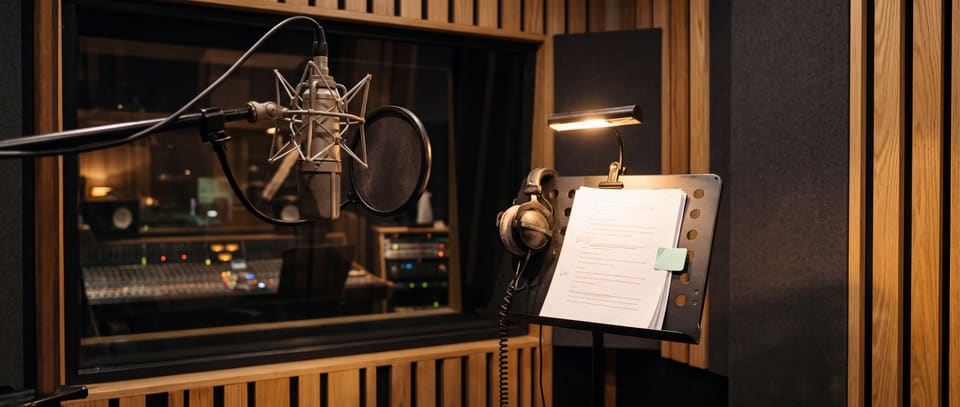
Recorded for Mexico
What turns a Spanish script into a Mexican one, line by line: address, Mexican nouns, pesos read aloud, Nahuatl and Maya place names, and when neutral is the better call.

How it works
From brief to final audio.
- 01
Tell us about the project
Share the markets, the script or its estimated length, the usage and the deadline.
- 02
Choose the voice
We send a shortlist of native Mexican voices with samples in your tone and notes on accent and register. You choose, and we book.
- 03
Receive the final audio
Edited takes for every language and version, named by language, in the formats your editor or learning platform needs.
Which Spanish to cast
Which Spanish to cast.
A script can be correct Spanish and still sound as if it was written in Madrid or Bogotá. In Mexico the giveaways are small nouns (pool, straw, pen, car boot), verbs such as rentar and platicar, the warmth of diminutives, and the way pesos and place names are read. Our guide to Spanish voice over for Spain, Mexico and Argentina compares three markets; this page goes further into Mexico alone.
Mexican words and their equivalents
| Mexican | Elsewhere | English |
|---|---|---|
| alberca | piscina | swimming pool |
| popote | pajita, pitillo, sorbete | drinking straw |
| pluma | bolígrafo, lapicera | pen |
| rentar | alquilar | to rent |
| platicar | charlar, conversar | to chat |
| cajuela | maletero, baúl | car boot |
| recámara | dormitorio, habitación | bedroom |
| camión | autobús | city bus |
| licuado | batido | smoothie, milkshake |
What the ear picks up
- 01
Accent
Seseo throughout, so casa and caza sound alike. A syllable-final s stays clear instead of softening, one reason Mexican reads are easy to follow abroad. In central Mexico unstressed vowels can shrink in fast speech and phrase endings often rise, then fall; a national spot keeps both moderate. The letter x has at least four readings: ks in taxi, a j sound in México and Oaxaca, an s in Xochimilco, a sh in Uxmal.
- 02
Register
Banks, insurers, health services and anyone serving older customers are still expected to say usted; tú is normal in apps, food and youth brands. A group is always ustedes. Courtesy carries weight: por favor, con gusto, ¿mande? and softening diminutives such as un momentito. Strip them out and a friendly script turns curt.
Before anyone records
Decide before the booth.
What to settle for Mexico before anyone records. It saves a second session.
- 01
Length
Mexican copy with its courtesy formulas runs longer than a terse neutral version. If the edit is locked, adapt and time the Mexican script before booking, not after a neutral one has already been recorded.
- 02
Formal or informal address
Pick tú or usted per brand and per channel and write it into the brief. Usted in the voice and tú on the buttons is the note a Mexican reviewer sends back most often.
- 03
Names and brands
Mark every place name with an x, every Nahuatl or Maya word and every English product name, each with the reading you want. Agree whether English names keep an English sound or the Mexican habit of saying them.
- 04
Numbers, prices and dates
Amounts are in pesos and the $ sign means pesos, so a script quoting US dollars has to say dólares. Decimals take a point. Write amounts as words for the voice (mil quinientos pesos, not $1,500). Dates run day, month, year.
- 05
Script on screen
Latin script with accents, ñ and the opening ¿ and ¡. On-screen supers should carry the same Mexican nouns the voice reads, in the same tú or usted.
Example
A line written for Mexico.
Example radio and social spot for a fictional home-internet provider, written for this page in informal tú.
¿Otra vez se cortó el internet a media videollamada? Con Red Uno contratas desde tu celular y un técnico llega a tu casa esta misma semana. Si algo falla, te contesta una persona, no un conmutador. Red Uno: internet para platicar sin pausas.
Did the internet cut out in the middle of a video call again? With Red Uno you sign up from your phone and a technician comes to your home this very week. If something goes wrong, a person answers, not a switchboard. Red Uno: internet for chatting without pauses.
Briefs
Who records in Spanish for Mexico.
The briefs this market usually brings, and what each one needs from the voice.
Consumer brands entering Mexico
TV, radio and social spots that should sound made in Mexico, not dubbed for the region.
Manufacturers with plants in Mexico
Safety, quality and onboarding modules for plant staff, usually in usted, with Mexican words for tools and shifts.
Banks, insurers and fintech apps
Tutorials, phone menus and product explainers where trust depends on the right register.
Hotels and destinations on the Caribbean and Pacific coasts
Films for Mexican domestic travellers, kept apart from the English versions for foreign guests.
Questions
Spanish: questions
Is Mexican Spanish the same as neutral Latin American Spanish?
No. A neutral script strips out what marks one country; a Mexican script keeps it on purpose: alberca, platicar, a Mexican voice and pesos. Use neutral when Mexico is one market among several, Mexican when Mexico is the audience.
Can a neutral Latin American recording run in Mexico?
For e-learning, tutorials and help content, usually yes. In advertising it often sounds generic, and any amount read in dollars or with no currency will confuse Mexican listeners.
Should a Mexican spot use tú or usted?
Follow the brand and the buyer. Apps, food and youth brands use tú; finance, health, insurance and business services tend to keep usted. Decide once and apply it to the voice, the supers and the buttons.
Does the voice need to come from Mexico City?
Not for national work: choose a voice without a strong regional mark. A chilango, norteño or Yucatecan colour suits a campaign aimed at that region.
How should place names with an x be handled?
List them in the brief with the reading: México and Oaxaca with a j sound, Xochimilco with an s, Uxmal with a sh. A voice from outside Mexico is the one most likely to stumble on them.
Can a Mexican recording serve Spanish speakers in the United States?
Often for audiences of Mexican origin, less so for a mixed audience from the Caribbean or South America. Check where your US viewers' families come from before reusing it.
Keep exploring
Find the voice for every market.
Tell us what you’re making and where it will be heard. No finished script? Share an outline.
The form asks
- Work emailWhere we send the quote
- Languages and marketspt-BR or pt-PT, es-ES or es-MX
- Your projectLength, where it will be used and your date. The script is optional.
We review your brief, clarify any missing details and confirm the scope, quote and delivery schedule.