Arabic (Gulf states) · ar
هلا واللهGulf Arabic voice over, shared or local
Gulf Arabic, or Khaleeji, is the family of spoken Arabic shared by Saudi Arabia, the UAE, Kuwait, Qatar, Bahrain and Oman. One Gulf voice in a light register can carry a regional brand film; a retail or telecom spot aimed at one country usually needs a voice from that country.
- Script
- Arabic, right to left
- Region
- Middle East and North Africa
- Availability
- To be confirmednative voices, shortlist for your script
Gulf states at a glance
- Speakers
- Arabic is the official language of every Gulf state, written into each one's founding text: Saudi Arabia's Basic Law of Governance, and the constitutions or basic statutes of the UAE, Kuwait, Qatar, Bahrain and Oman. What those texts set is written Arabic; the Khaleeji people speak at home has no official status and is chosen by ear.[1][2][3][4][5][6]
- Where it is used
- Khaleeji is what you hear in Gulf advertising, social video, radio talk, telecom and banking spots, delivery and ride apps and the friendlier end of government outreach. Formal Standard Arabic still holds ministry announcements, disclaimers, news, school content and most compliance training. Many Gulf campaigns sit between the two: Standard grammar, Gulf sounds and a handful of Gulf words.
The short answer
Can one Gulf Arabic voice cover all six countries?
For brand films, airline and tourism content and corporate explainers, often yes, if the script stays in a middle register. For retail, telecom and promotional spots aimed at one country, cast a voice from that country.
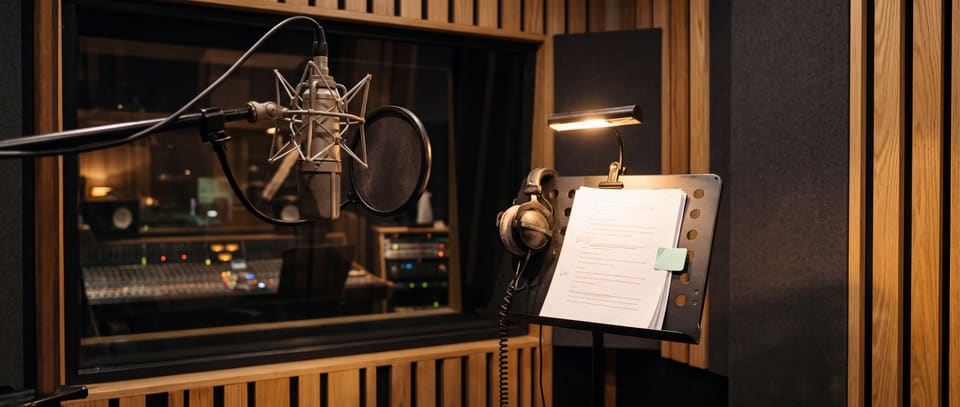
Recorded for Gulf states
A test for when a single Khaleeji voice can carry a campaign across Saudi Arabia, the UAE, Kuwait, Qatar, Bahrain and Oman, and when the words for 'what' and 'now', six currencies and the country on screen force a separate recording per market.

How it works
From brief to final audio.
- 01
Tell us about the project
Share the markets, the script or its estimated length, the usage and the deadline.
- 02
Choose the voice
We send a shortlist of native Gulf voices with samples in your tone and notes on accent and register. You choose, and we book.
- 03
Receive the final audio
Edited takes for every language and version, named by language, in the formats your editor or learning platform needs.
Arabic (Gulf states) vs Arabic elsewhere
How Gulf states sounds different.
Treat 'Gulf' as a casting brief, not a single accent. Saudi speech already splits between Najd, the Hijaz and the Eastern Province; Kuwaiti and Bahraini speech share features an Emirati ear notices at once; Qatari and Omani each carry their own tune. A shared Khaleeji read works when the script avoids the words that give each country away.
Gulf words and their equivalents
| Gulf | Elsewhere | English |
|---|---|---|
| الحين | الآن | now |
| وايد | كثيرًا | a lot, very |
| زين | جيد | good, fine |
| أبي · أبغى | أريد | I want |
| شلون؟ | كيف؟ | how? |
| وش · شو · شنو | ماذا؟ | what? (Saudi · Emirati · Kuwaiti and Bahraini) |
What the ear picks up
- 01
Accent
Gulf voices often turn the q of Standard Arabic into a hard g (qalb becomes galb) and, in some countries and some words, k into ch. For a regional read, ask the voice to keep these features soft and consistent rather than switching between Standard and colloquial sounds mid-line.
- 02
Register
A pan-Gulf script lives in a middle register sometimes called white Gulf: Standard sentence shapes, colloquial rhythm, no strongly local slang. Push further into one country's speech only when the spot runs in that country alone.
Before anyone records
Decide before the booth.
What to settle for Gulf states before anyone records. It saves a second session.
- 01
Length
A middle-register Gulf read usually moves faster than vowelled Standard Arabic but slower than street-level colloquial. Fix the register, record a scratch read of the Arabic, and time that, rather than timing the English source.
- 02
Formal or informal address
Decide who the spot speaks to. Many Arabic spots default to the masculine singular; if the product is for women, or for families, write the feminine or plural forms in the script so the voice does not have to improvise them.
- 03
Names and brands
List every city with its Arabic spelling and the way your market says it (الرياض Riyadh, دبي Dubai, الدوحة Doha, المنامة Manama). Mark English brand names that stay in English and Arabic brand names that keep a fixed spelling across all six markets.
- 04
Numbers, prices and dates
Each country has its own money: Saudi and Qatari riyals, UAE dirhams, Kuwaiti and Bahraini dinars, Omani rials. A shared regional version should avoid quoting amounts on the voice track; put them on screen per market. Write out how any phone number, offer code or date is spoken, and say whether a Hijri date is read.
- 05
Script on screen
On-screen Arabic runs right to left while logos, URLs and many numbers run left to right. Check every super where the two meet, decide between Arabic-Indic and Western digits per market, and make sure the animation enters from the right for the Arabic edit.
Example
A line written for Gulf states.
Written for this page as a regional banking-app spot in a light Gulf register, masculine singular address. A country version would swap the cities and let the voice localise words such as الحين.
افتح حسابك الحين من جوالك، بدون ما تزور الفرع. من الرياض للدوحة، حسابك معك وين ما رحت. حمّل التطبيق اليوم.
Open your account now from your phone, without visiting a branch. From Riyadh to Doha, your account goes with you wherever you go. Download the app today.
Briefs
Who records in Arabic for Gulf states.
The briefs this market usually brings, and what each one needs from the voice.
Regional brand and marketing teams in Dubai or Riyadh
One Gulf master for brand films and social cut-downs, with country versions for retail pushes.
Telecoms, banks and fintech apps
Onboarding videos, app walkthroughs and IVR prompts in a friendly Khaleeji register.
Airlines, tourism and events
Welcome films, in-venue announcements and destination spots heard by Gulf visitors from several countries.
Global companies with Gulf offices
Explainers and internal films where Standard Arabic would sound stiff and one country's slang would sound narrow.
Questions
Arabic (Gulf states): questions
Can one Gulf Arabic voice cover all six countries?
For brand films, airline and tourism content and corporate explainers, often yes, if the script stays in a middle register. For retail, telecom and promotional spots aimed at one country, cast a voice from that country.
Is a Saudi voice understood in the Emirates or Kuwait?
Understood, yes. Heard as local, no. Listeners place a Saudi, Emirati or Kuwaiti speaker quickly, which is fine for a regional message and distracting in a spot that pretends to come from next door.
Should the Gulf version use Standard Arabic or Khaleeji?
Use Standard Arabic for ministries, public notices and anything that must read as official, Khaleeji for advertising and social, and the white Gulf middle register when one recording must serve several countries.
How do we handle money in a regional Gulf spot?
Keep amounts off the voice track and show them on screen per country, since riyals, dirhams and dinars differ. If the voice must say an amount, record a separate line for each market.
Do we need a different script for Saudi Arabia?
Often a light adaptation. Saudi audiences are large and varied, so a national Saudi spot usually gets its own pass for vocabulary and address, and sometimes a voice whose accent suits the region the campaign targets.
Does our English Gulf campaign need an Arabic version at all?
Gulf campaigns often run in both languages because audiences mix nationals and residents from abroad. Decide per channel: Arabic for national audiences and public messages, English where the media plan targets residents.
Keep exploring
Sources
- Saudi Arabia, Basic Law of Governance, Article 1 ("Its language shall be Arabic"), University of Minnesota Human Rights Library · consulted 2026-11-22
- Constitution of the United Arab Emirates, Article 7 ("The official language of the UAE is Arabic"), Constitute Project · consulted 2026-11-22
- Constitution of Kuwait, Article 3 ("Arabic is the official language of the State"), Constitute Project · consulted 2026-11-22
- Constitution of Qatar, Article 1 ("its official language is the Arabic language"), Constitute Project · consulted 2026-11-22
- Constitution of Bahrain, Article 2 ("The official language is Arabic"), Constitute Project · consulted 2026-11-22
- Oman, Basic Statute of the State (as amended 2011), Article 3 ("The official language of the State is the Arabic language"), Constitute Project · consulted 2026-11-22
Find the voice for every market.
Tell us what you’re making and where it will be heard. No finished script? Share an outline.
The form asks
- Work emailWhere we send the quote
- Languages and marketspt-BR or pt-PT, es-ES or es-MX
- Your projectLength, where it will be used and your date. The script is optional.
We review your brief, clarify any missing details and confirm the scope, quote and delivery schedule.